
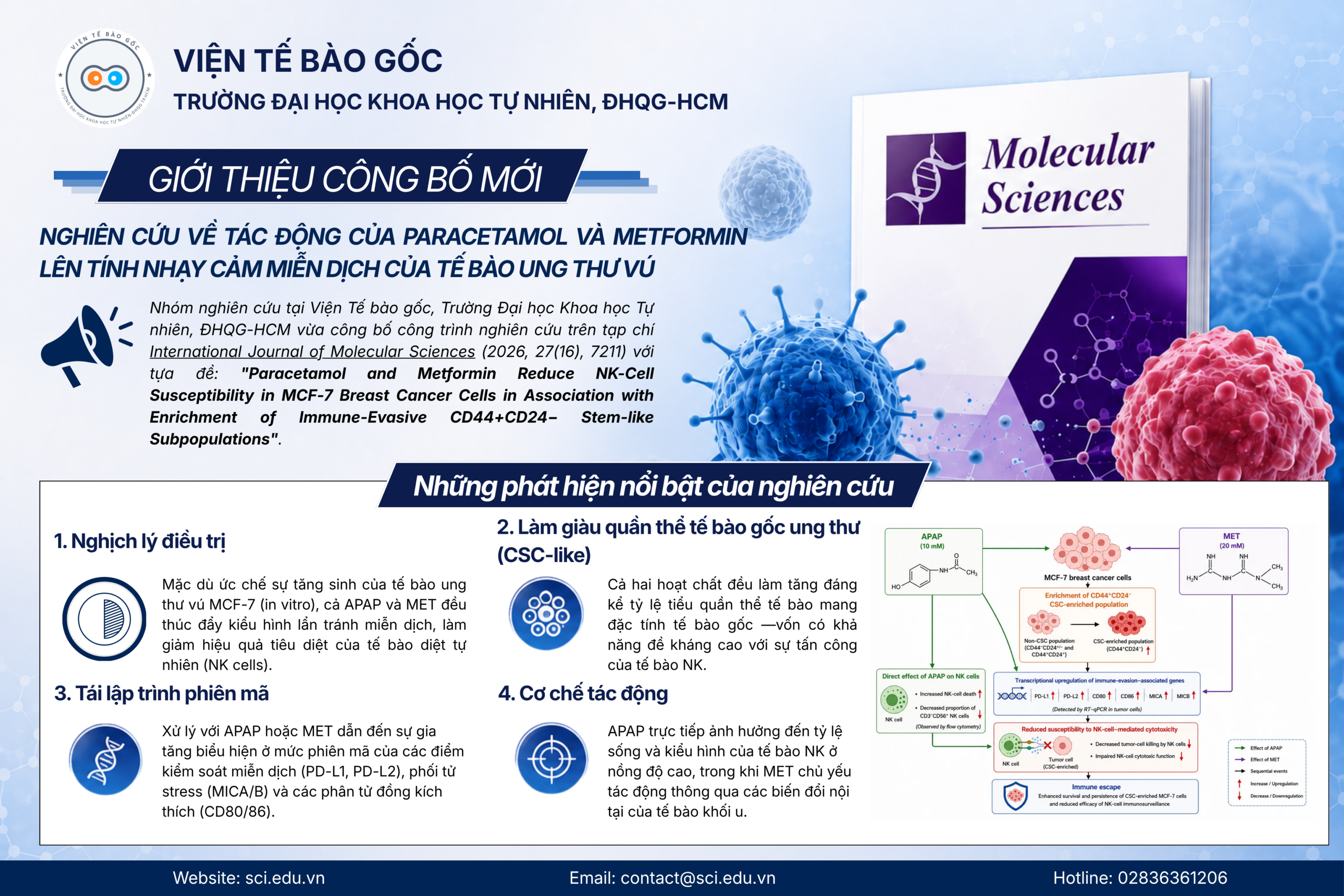
Nhóm nghiên cứu tại Viện Tế bào gốc, Trường Đại học Khoa học Tự nhiên, ĐHQG-HCM vừa công bố công trình nghiên cứu trên tạp chí International Journal of Molecular Sciences (2026, 27(16), 7211) với tựa đề: “Paracetamol and Metformin Reduce NK-Cell Susceptibility in MCF-7 Breast Cancer Cells in Association with Enrichment of Immune-Evasive CD44+CD24− Stem-like Subpopulations”.
Công trình tập trung làm rõ tác động ngoài ý muốn của hai loại thuốc thường dùng trong điều trị hỗ trợ và quản lý chuyển hóa ở bệnh nhân ung thư: Paracetamol (APAP) và Metformin (MET).
Những phát hiện nổi bật của nghiên cứu:
- Nghịch lý điều trị: Mặc dù ức chế sự tăng sinh của tế bào ung thư vú MCF-7 (in vitro), cả APAP và MET đều thúc đẩy kiểu hình lẩn tránh miễn dịch, làm giảm hiệu quả tiêu diệt của tế bào diệt tự nhiên (NK cells).
- Làm giàu quần thể tế bào gốc ung thư (CSC-like): Cả hai hoạt chất đều làm tăng đáng kể tỷ lệ tiểu quần thể tế bào mang đặc tính tế bào gốc
—vốn có khả năng đề kháng cao với sự tấn công của tế bào NK.
- Tái lập trình phiên mã: Xử lý với APAP hoặc MET dẫn đến sự gia tăng biểu hiện ở mức phiên mã của các điểm kiểm soát miễn dịch (PD-L1, PD-L2), phối tử stress (MICA/B) và các phân tử đồng kích thích (CD80/86).
- Cơ chế tác động: APAP trực tiếp ảnh hưởng đến tỷ lệ sống và kiểu hình của tế bào NK ở nồng độ cao, trong khi MET chủ yếu tác động thông qua các biến đổi nội tại của tế bào khối u.
Kết quả nghiên cứu cung cấp thêm góc nhìn cơ chế về tương tác giữa thuốc điều trị hỗ trợ và hệ miễn dịch, nhấn mạnh sự cần thiết phải đánh giá toàn diện các liệu pháp kết hợp nhằm tối ưu hóa hiệu quả của liệu pháp miễn dịch trong tương lai.
Chi tiết bài báo được đăng tải tại: IJMS 2026, 27(16), 7211.
Study Published on the Effects of Paracetamol and Metformin on the Immune Susceptibility of Breast Cancer Cells
A research team at the Stem Cell Institute, University of Science, VNU-HCM has recently published an article in the International Journal of Molecular Sciences (2026, 27(16), 7211) titled: “Paracetamol and Metformin Reduce NK-Cell Susceptibility in MCF-7 Breast Cancer Cells in Association with Enrichment of Immune-Evasive CD44+CD24− Stem-like Subpopulations”.
The study focuses on clarifying the unintended effects of two drugs widely used in supportive care and metabolic management for cancer patients: Paracetamol (APAP) and Metformin (MET).
Key Findings:
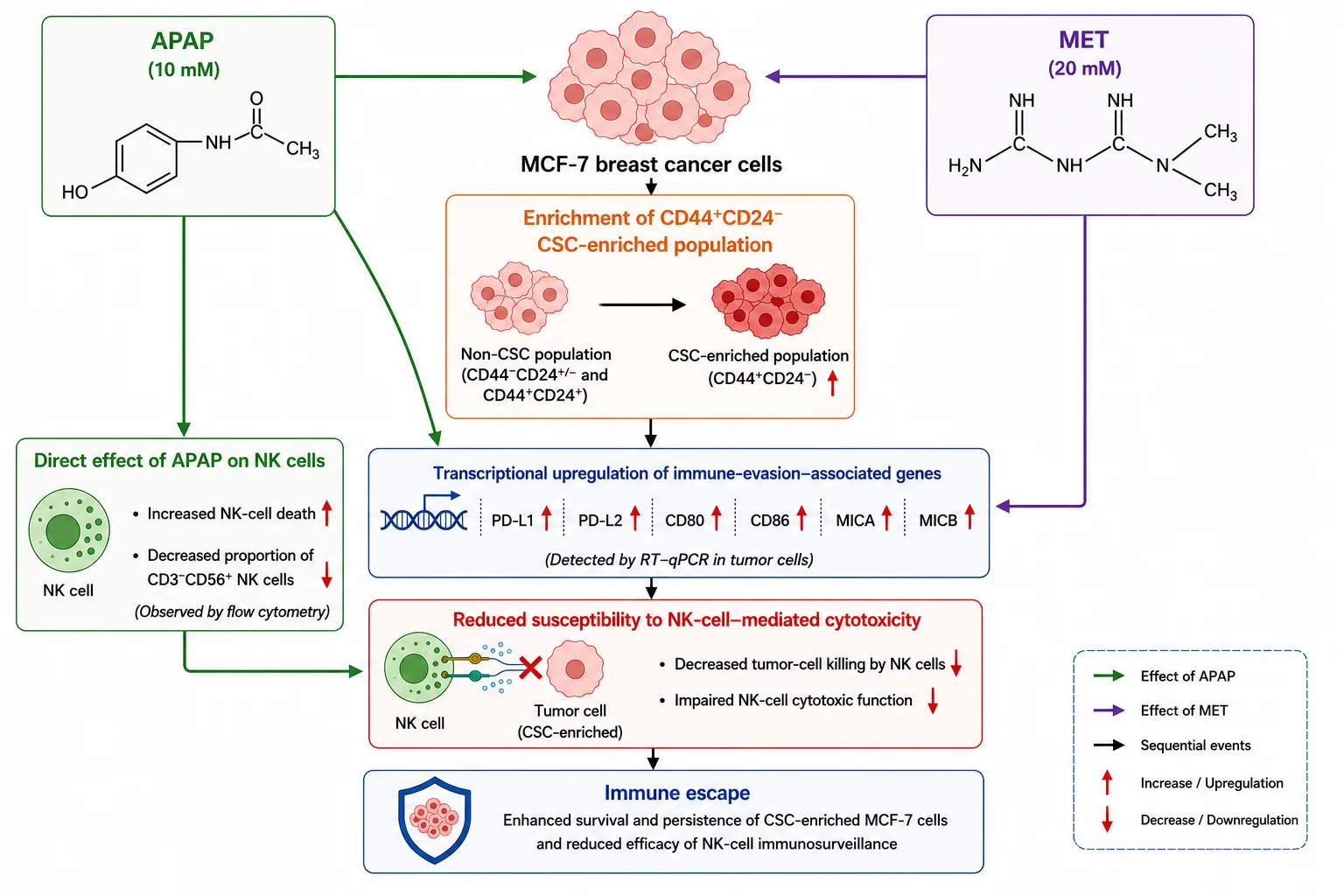
- Therapeutic Paradox: Despite inhibiting the proliferation of MCF-7 breast cancer cells in vitro, both APAP and MET promote an immune-evasive phenotype, diminishing the cytotoxic efficacy of natural killer (NK) cells.
- Cancer Stem Cell-like (CSC-like) Enrichment: Both compounds significantly increase the proportion of the CD44+CD24− stem-like subpopulation, which is highly resistant to NK cell attack.
- Transcriptional Reprogramming: Treatment with APAP or MET upregulates the transcript-level expression of immune checkpoints (PD-L1, PD-L2), stress ligands (MICA/B), and costimulatory molecules (CD80/86). Mechanisms of Action: APAP directly affects NK cell viability and phenotype at high concentrations, whereas MET primarily exerts its effects through intrinsic tumor cell alterations.
The study provides mechanistic insights into the interactions between supportive medications and antitumor immunity, underscoring the need for a comprehensive evaluation of combination therapies to optimize the efficacy of future immunotherapeutic strategies.
Article Details: IJMS 2026, 27(16), 7211.
Leave a Reply